

The UNSW ADA Skills Passport is a co-designed, evidence-based initiative to help our students identify, track and articulate the skills they develop throughout their studies.
Skills are set to play an increasingly prominent role in higher education, as reflected in the Australian Universities Accord and in the shift in essential skills that the next generation will need to succeed in the workforce. In our rapidly evolving world, enduring human skills have become the anchor that enable our students to successfully navigate an inherently uncertain future. Although the importance of these skills is clear to university students across the sector, a new piece of ADA research has established that an average of two-thirds of them can’t confidently identify or articulate their skills.
So, how can we make it easier for students to identify and communicate the breadth and depth of skills they are gaining through their studies at UNSW? This was the driving question behind the development of the UNSW ADA Skills Passport, a co-designed, evidence-based initiative currently being piloted in ADA.
A framework of enduring human skills
The first step of the project was to undertake a rigorous analysis and benchmarking of all existing skills taxonomies and models used by government and industry to identify a core set of skills. While there are many taxonomies already out there, they are largely driven by topical priorities and patterns in job searches and recruitment – not designed with students and educators in mind.
The result was our UNSW ADA Skills Taxonomy: a set of nine enduring human skills that will help our students thrive across their learning, work and life.
"These skills...help you develop your personal identity, your work, all new things." – ADA student
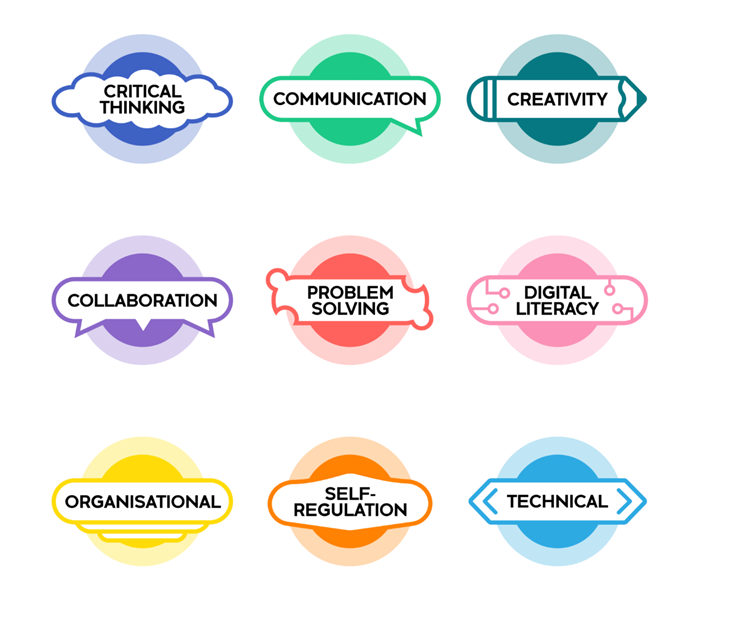
Building on this skills taxonomy, we developed the UNSW ADA Skills Passport, which has three dimensions:
- Skills mapping with ADA educators to identify the enduring human skills already present in their courses and programs.
- Skills surfacing by co-designing practical resources to support educators to clearly flag the skills that they are teaching.
- Skills articulating by developing a series of student-facing resources and tools to empower students to document and track their skills development.
What our UNSW students are saying
Having identified this core set of skills, we needed to get our students’ and graduates’ perspectives. Throughout last year, we surveyed and held focus groups with our ADA students alongside continuous industry and alumni engagement:
- Just under 95% of students found these enduring human skills comprehensive and relevant.
- Nearly 90% of students felt that developing skills is central to a university education.
- 73% of students saw skills development as a shared responsibility between themselves and the university.
- And 87% of our students viewed disciplinary knowledge and skills development as equally important, not competing priorities.
On a practical level, many students shared that they struggle to clearly connect course learning outcomes, assessments and skills, and did not feel comfortable claiming to have developed skills through their courses unless explicitly surfaced – a finding mirrored across the sector.
"If I could show that this course taught me these skills, I'd feel more confident explaining them." – ADA student
Our students also reiterated the importance of explicit skills teaching over implicit development. Other useful reflections included:
- the need for resources and support for delivering explicit skills training to work alongside disciplinary knowledge
- the opportunity to embed skills more clearly in assessment tasks (such as in instructions or rubrics)
- a desire for a UNSW-verified record of skills that they could share – for example, with potential employers.
We are collating these insights and seeking ongoing input from students, educators and industry stakeholders to incorporate them in the UNSW ADA Skills Passport. We look forward to sharing our findings and resources with the UNSW community, and beyond, over the coming months.
"I know I've developed these skills...but it's very different talking casually versus (in a professional context)." – ADA student
Empowering our students to thrive
While there’s no way of knowing what the coming 10, 20 or 30 years will bring, we do know that equipping our students with these enduring human skills – and the ability to recognise, articulate and apply them – will offer them the best opportunity to thrive in every stage of their lives and careers, making their UNSW education the very definition of lifelong learning and success.
Keen to learn more about the UNSW ADA Skills Passport? Visit the ADA Skills Passport website or email us at ada.skillspassport@unsw.edu.au.
The Skills Passport team:
- Professor Stephen Doherty, Deputy Dean (Education) – Academic Lead
- Jennifer Perkins, Manager, Education Innovation – Professional Lead
- Josephine Holecek, Educational Program Manager
- Himani Chugh, Educational Designer
- Dr Caitlin Hamilton, Senior Research Officer.
- Log in to post comments